
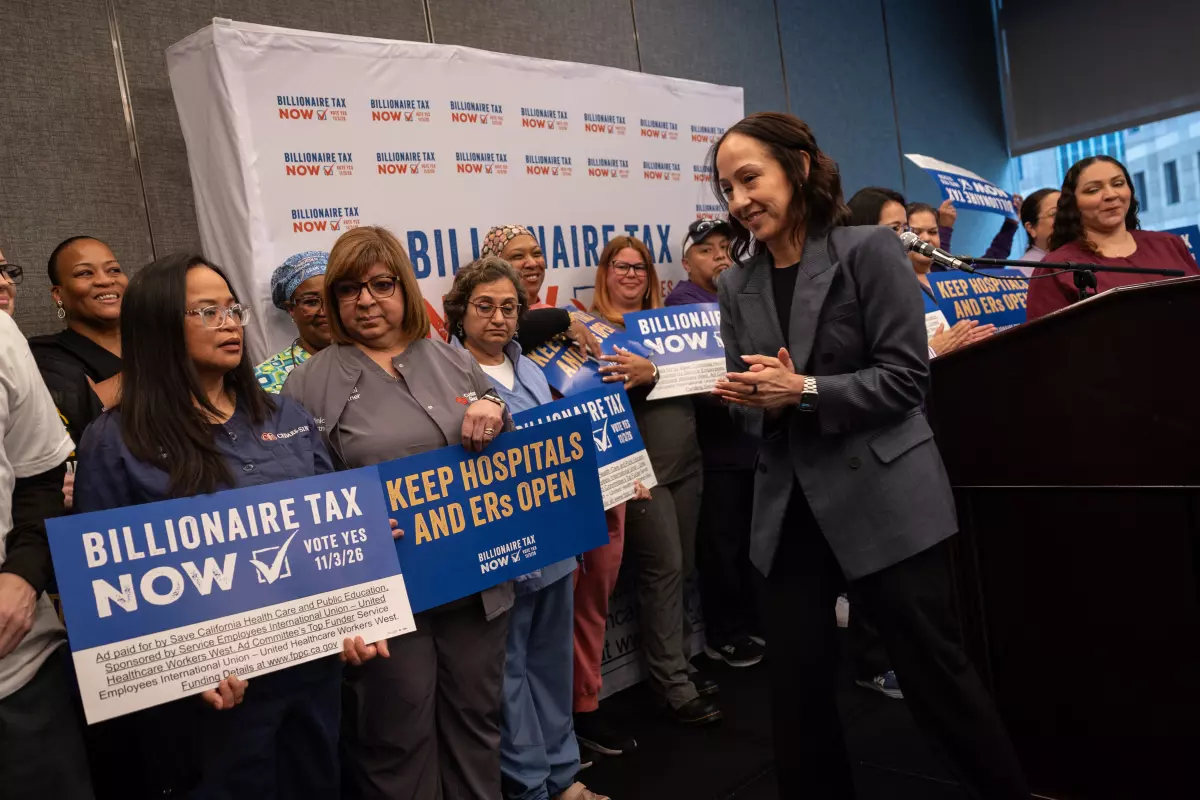
California Billionaire Tax Backers Claim Enough Signatures for November Ballot Fight
A major political battle is unfolding in California after supporters of a proposed billionaire tax announced they have collected enough signatures to qualify the measure for the November ballot. If approved by voters, the controversial proposal would impose a one-time levy on the state’s wealthiest residents, with most of the revenue directed toward healthcare programs.
Backers of the initiative say they submitted nearly 1.6 million signatures, almost double the number required to place the measure before voters. Under state rules, supporters need approximately 875,000 valid signatures from registered voters before the deadline in late June. The announcement signals growing momentum for one of the most closely watched ballot fights in the nation.

Supporters argue the tax is necessary to offset the impact of recent federal healthcare funding reductions. Labor leaders and advocacy groups say those cuts have placed pressure on hospitals, emergency services, and low-income communities throughout the state. According to campaign organizers, the billionaire tax would help stabilize healthcare access for millions of residents.
The proposal would apply to taxpayers and trusts with assets exceeding $1 billion. It would impose a one-time tax of up to 5%, payable over five years. Roughly 90% of the funds raised would go toward healthcare-related programs, while the remaining portion would support food assistance and education initiatives. Campaign organizers estimate the measure could generate around $100 billion if approved.
The scale of the proposal has immediately drawn sharp criticism from business groups and tax opponents. Critics warn that targeting ultra-wealthy residents could backfire by encouraging high-net-worth individuals to move assets, businesses, or residency outside California. Since the state already depends heavily on top earners for tax revenue, opponents argue that additional burdens may weaken long-term budget stability.
One of the most vocal opponents is the California Business Roundtable, which described the measure as harmful to the economy and ineffective in solving California’s structural deficit. Critics also say the proposal does little to address broader spending issues that contributed to the state’s budget challenges.
The political fight has become even more complex because of a competing initiative known as the “Transparency Act.” Supporters of that proposal also say they have gathered enough signatures for the ballot. While presented as a fiscal accountability measure, it includes provisions that could effectively block or weaken future special taxes if approved by voters. If both measures pass, the one receiving more votes could override the other in certain circumstances.
Campaign finance filings show enormous sums are already flowing into the fight. Billionaire tech figures and business interests have donated millions to oppose the wealth tax, while organized labor groups have invested heavily in support. Among the most notable names connected to opposition funding are Chris Larsen and Sergey Brin.
The issue has also exposed divisions within the Democratic Party. Progressive leaders such as Bernie Sanders have publicly supported the concept of taxing billionaires more aggressively. Meanwhile, Gavin Newsom has criticized state-based wealth taxes and expressed opposition to the proposal. Several candidates seeking to succeed Newsom have also lined up against it, while a smaller number support the plan.
For supporters, the campaign is about fairness and public priorities. They argue that California’s wealthiest residents have benefited enormously from the state’s economy and should contribute more during a period when hospitals face strain and families struggle with rising living costs.
For opponents, the proposal represents a risky experiment that could undermine competitiveness and push investment elsewhere. They contend California already has some of the highest taxes and living costs in the United States.
As signature verification proceeds, California voters appear headed toward a high-stakes November showdown. The result could influence not only state finances but also national debates over wealth taxation, inequality, and the role of ballot initiatives in shaping economic policy.