
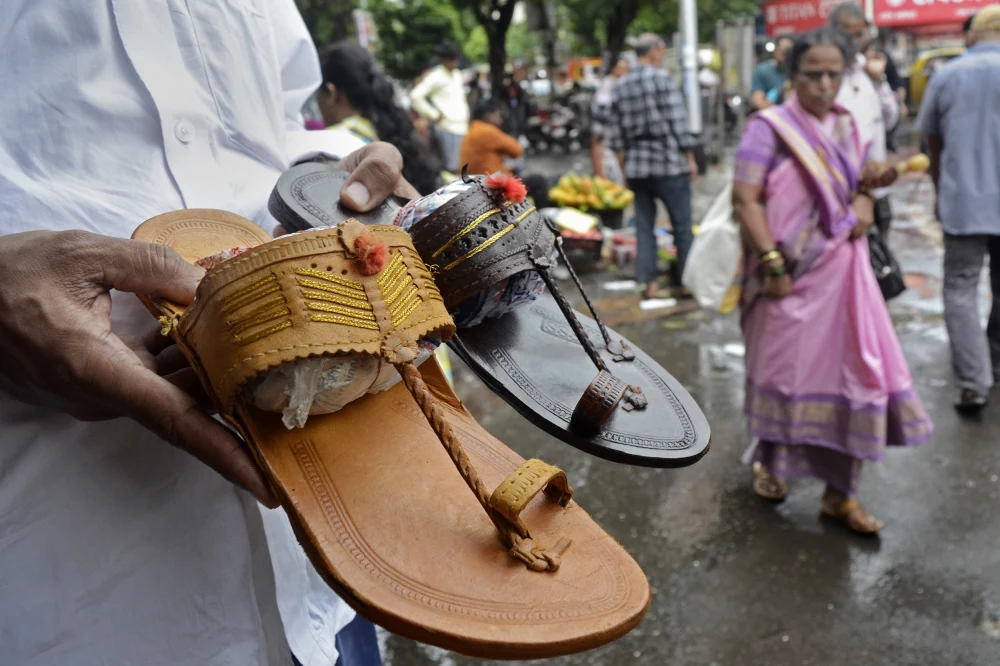
Prada Launches ‘Made in India’ Sandals After Kolhapuri Backlash
Prada is attempting to repair relations with Indian artisans and consumers by launching a limited-edition collection of sandals made in India, following last year’s controversy over designs resembling traditional Kolhapuri footwear.
The new sandals, priced at approximately $880 per pair, are inspired by the iconic Kolhapuri chappals—a handcrafted footwear style with roots stretching back centuries. The launch signals a significant shift from criticism toward collaboration.

The dispute began in June 2025 when Prada showcased sandals during a fashion presentation in Milan that many observers said closely resembled Kolhapuri designs. The collection quickly sparked backlash across India.
Artisans, cultural commentators, and political figures accused the luxury label of borrowing from Indian heritage without acknowledgment or compensation. The debate intensified online, where many users described the move as an example of cultural appropriation by a global luxury brand profiting from traditional craftsmanship.
Kolhapuri sandals are especially associated with regions in Maharashtra and Karnataka. Known for their durability, handcrafted detailing, and open-toe design, they have long been worn across generations in India and increasingly appreciated internationally for their timeless aesthetic.
In response to criticism, Prada later acknowledged that its runway designs were influenced by ancient Indian styles and indicated willingness to engage with artisan groups. That dialogue now appears to have evolved into a formal production initiative.
According to company statements, Prada plans to produce around 2,000 pairs through partnerships with two state-backed Indian bodies. The project combines local handcrafting traditions with Italian production technology and finishing standards.
The sandals will be sold in 40 selected Prada stores worldwide as well as through the company’s online platform. By limiting supply and controlling distribution, Prada appears to be positioning the release as both an exclusive luxury item and a symbolic cultural partnership.
But the commercial launch is only part of the strategy. Prada has also announced a three-year training initiative for artisans from eight districts traditionally linked to Kolhapuri sandal-making.
The program will be delivered in structured six-month modules through leading Indian design institutions, including the National Institute of Fashion Technology. Approximately 180 artisans are expected to participate beginning next month.
Organizers say the initiative aims to strengthen technical skills, improve design development, and help traditional craft communities access modern global markets.
Some participants may also receive opportunities to visit the Prada Group Academy in Italy, where they can gain further exposure to international luxury manufacturing systems.
The move reflects a broader shift occurring in the fashion industry. Global brands increasingly face pressure not only to credit cultural inspiration but also to build equitable relationships with source communities through licensing, training, and shared economic opportunity.
For Prada, the stakes are reputational as much as commercial. Luxury consumers today are often highly aware of questions around ethics, sourcing, authenticity, and cultural respect. A misstep can trigger worldwide backlash in hours.
For India, the collaboration may represent something larger: recognition that traditional crafts can compete on the world stage when supported by branding, design innovation, and fair market access.
Still, some critics may remain skeptical. They will likely ask whether artisans are receiving meaningful long-term value or whether the initiative primarily serves as image repair after last year’s controversy.
That debate is unlikely to disappear. But the launch demonstrates that heritage craftsmanship is no longer peripheral to global fashion—it is central to it.
If successful, the Prada-Kolhapuri collaboration could become a model for how luxury houses engage with traditional cultures in the future: not by borrowing silently, but by partnering visibly.
